
Tarot Journaling: 30 Prompts for Self-Discovery
Thirty tarot journaling prompts for beginnings, emotions, relationships, work, shadow and endings, plus a simple daily habit and a monthly review.
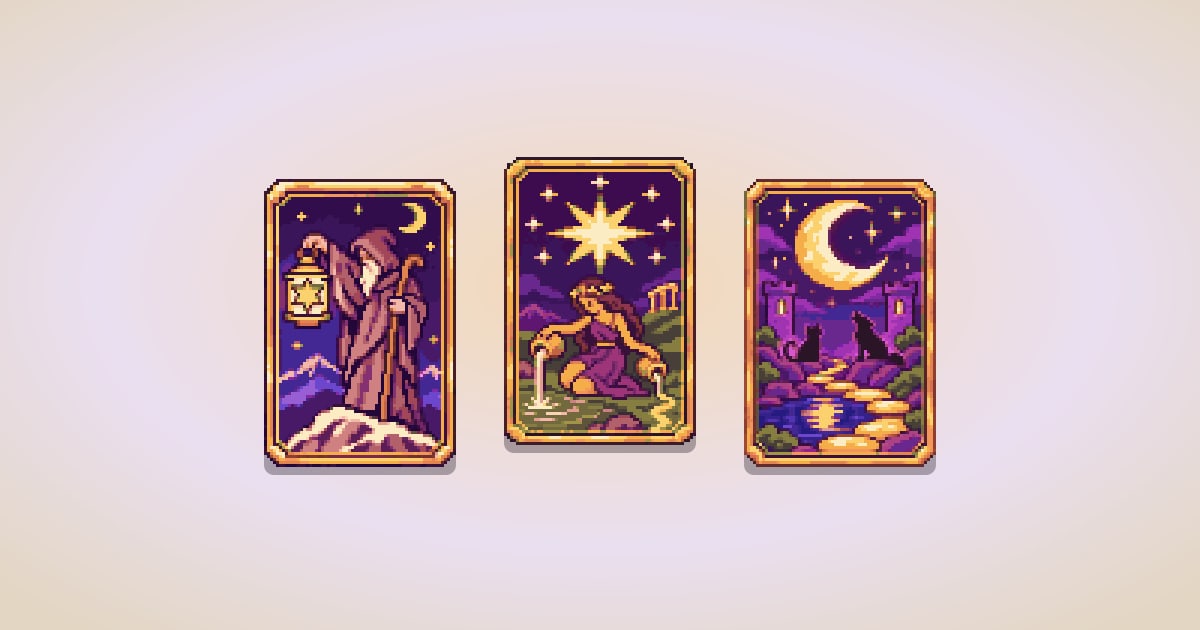
A tarot card can feel meaningful for about ninety seconds. Then the kettle boils, a message arrives, and by lunch you cannot remember whether you drew the Six of Cups or the Six of Swords.
A journal catches those ninety seconds before they slip away. Over weeks, it turns a deck of pictures into a record of your own inner life. This guide shows a simple way to begin, then offers 30 prompts to use with any card, grouped by theme.
Why write about your cards at all
Tarot works as a mirror. The picture on a card invites you to notice something you were already feeling but had not yet put into words. Writing is how you finish that thought.
A journal also keeps you honest. It is easy to remember only the readings that seemed to "come true" and forget the rest. Written entries show you what a card actually meant to you on a given day, which is far more useful than a vague sense that tarot is or is not "accurate".
Most of all, it builds your own vocabulary. A guidebook says the Ten of Wands is about burden and overwork. Your journal might reveal that, for you, it tends to appear in the week before a deadline, when you have said yes to too much. That personal layer is what makes readings feel alive.
Start small: one card, one page, five minutes
Ambitious journaling plans tend to fade by day four. Try this instead.
- Each morning, shuffle and draw a single card, as in the one card spread.
- Write the date, the card's name, and whether it is upright or reversed.
- Note three things you see in the picture, before you look anything up.
- Choose one prompt from the list below and write for five minutes.
- In the evening, add one line: where did this card show up today, if at all?
That is the whole practice. Some mornings fill a page, others fill two sentences. Both count.
A paper notebook feels lovely, but notes on your phone work too. What matters is that the entries are dated and kept together in one place.
30 prompts for self-discovery
Use any prompt with any card. Where a card is named, it is a natural pairing: try that prompt when the card appears, or pull the card from the deck on purpose when you want to explore the theme.
Beginnings
- If this card were the first page of a new chapter, what would the chapter be called?
- What am I curious about right now that I have not admitted out loud?
- With The Fool: what would I try if I did not need to be good at it yet?
- What small seed could I plant this week, and what would it need to grow?
- Where in my life am I waiting for permission that I could give myself?
Emotions
- What feeling does this picture stir in my body before I think about its meaning?
- Which figure in the card do I relate to most, and why?
- When did I last feel the way this card looks?
- With The Moon: what am I unsure about, and which parts of it are facts and which are fears?
- What emotion have I been politely ignoring this week?
Relationships
- Who in my life does this card remind me of, and what does that say about how I see them?
- With the Three of Cups: which friendships fill me up, and when did I last celebrate them?
- What do I bring to my closest relationships that I rarely give myself credit for?
- Is there a conversation I keep rehearsing in my head? What is the kindest true thing I could say?
- How do I want the people I love to feel after time with me?
Work and purpose
- What part of my day does this card point to, and how do I feel about that part?
- With the Eight of Pentacles: what skill am I quietly getting better at?
- If my working week were painted on a tarot card, what would be happening in the picture?
- What am I doing out of habit rather than choice?
- What would "enough" look like for me this month?
Shadow and growth
- What in this card do I resist or dislike? Where might that same quality live in me?
- With The Devil: which habit or pattern feels like a chain, and how loose is it really?
- What story about myself am I tired of telling?
- When this card lands reversed, what energy in me feels blocked or turned inward?
- With The Hermit: what might I hear if I gave myself one quiet hour with no input at all?
Endings
- What is this card asking me to finish, rather than start?
- With Death: what is already ending in my life, and what room could that make?
- What am I carrying that no longer belongs to me?
- What deserves a proper goodbye, even a small one?
- With The Star: after a hard season, what is quietly returning?
For a longer session, the self-reflection spread pairs beautifully with the shadow and growth prompts. Its five positions (the heart, the roots, the shadow, the light and the path) each make a natural heading for a journal page.
Reading back a month of entries
The real reward of a tarot journal arrives at the end of the month. Set aside half an hour, make a cup of tea, and read every entry from the beginning.
Then look for patterns:
- Repeat visitors. Which cards appeared more than once? A card that keeps returning deserves a full page of its own.
- Suit balance. Count your Wands, Cups, Swords and Pentacles. A month heavy in Swords may reflect a lot of thinking and worrying. Plenty of Cups can point to an emotional season.
- Major Arcana. How many of the big cards did you draw? Several Majors can mark a month of meaningful change.
- Your evening lines. Read only the "where did it show up?" notes. They are often more revealing than the morning reflections.
- Your own words. Do certain words keep turning up in your writing, like "tired", "should" or "excited"?
Close the review with three questions. What did I learn about myself this month? What am I proud of? What do I want to carry into next month?
Finally, choose one card that sums up the month, either from your entries or by browsing the full card library, and write a short paragraph about why you picked it. It becomes a gentle bookmark for that season of your life.
Making the habit stick
- Link it to something you already do, like your first coffee or the bus ride home.
- Keep the deck in sight. A deck tucked in a drawer is easy to forget.
- Skip the guilt. Missing three days is normal. Pick up again on the fourth.
- Be honest rather than clever. The journal is for you alone. A messy truth beats a beautiful sentence.
- Remember what tarot is for. It is a tool for reflection. If writing stirs up something heavy, talking with someone you trust or with a professional is a sign of strength.
Still learning the cards? The beginner's guide to reading tarot explains how to read a picture, its keywords and its position. Or draw your card for today with a free tarot reading and begin with prompt number one.
Try it with your own cards
Ask a question and draw a free reading in your browser.
Keep reading
-
 Learn TarotHow to Read Tarot Cards: A Beginner's GuideLearn to read tarot step by step: the 78-card deck, the four suits, asking a good question, shuffling, reversals and a first practice exercise.
-
 Love & RelationshipsHow to Read Tarot for Love and RelationshipsA kind, honest guide to love tarot: better questions, the cards most tied to romance, readings for singles, couples and after a breakup, plus a spread.
-
 Tarot SpreadsThe Past, Present, Future Tarot Spread: How to Read ItHow to read the Past, Present, Future tarot spread: what each position means, good questions to ask, a full worked example and three useful variations.